


A strong client reporting workflow starts long before monthly reports are produced. For ecommerce accountants using Xero or QuickBooks, the quality of client reporting depends intrinsically on the quality of the financial data entering the accounting software. Marketplace fees, refunds, payment processing charges, and settlement adjustments all need to be recorded correctly before reports can provide meaningful commercial insight. A structured reporting workflow ensures every client receives consistent, accurate information that supports better business decisions and fosters workflow optimization.
Key Takeaways from this Post
Reporting quality depends on data quality at entry. Marketplace fees, refunds, and settlement adjustments must be accurately categorized before reaching Xero or QuickBooks—reports built on uncorrected data mislead rather than inform.
Consistency scales; customization adds value. Standardized report structures let clients track trends over time, while tailored commentary addressing their specific channels and priorities turns compliance into commercial insight.
Preparation work consumes advisory time. Every hour spent correcting imported transactions is an hour not spent analyzing performance—structured automation frees accountants to explain changes and guide decisions rather than rebuild records.







A strong client reporting workflow starts long before monthly reports are produced. For ecommerce accountants using Xero or QuickBooks, the quality of client reporting depends intrinsically on the quality of the financial data entering the accounting software. Marketplace fees, refunds, payment processing charges, and settlement adjustments all need to be recorded correctly before reports can provide meaningful commercial insight. A structured reporting workflow ensures every client receives consistent, accurate information that supports better business decisions and fosters workflow optimization.
Why Ecommerce Reporting is Different from Traditional Accounting
Traditional businesses usually have relatively straightforward revenue streams. Sales are recorded, expenses are categorized, and reports are produced. Ecommerce businesses, however, introduce additional layers of complexity that necessitate specialized client reporting best practices.
Clients may sell across various platforms, including:
- Amazon
- Shopify
- WooCommerce
- eBay
- Etsy
- TikTok Shop
Each platform reports transactions differently, creating unique challenges for data aggregation and reconciliation.
- Marketplace fees are often deducted before payouts are even received, requiring careful tracking.
- Refunds can appear in different reporting periods, complicating cash flow analysis.
- Payment processors add another layer of reconciliation, demanding precision.
If this information is incomplete or inaccurate, the reports produced in Xero or QuickBooks become less useful, hindering effective performance reporting. This highlights the critical need for robust reporting automation and specialized reporting tools designed for ecommerce.
The Purpose of Client Reporting: Beyond Just Producing Reports
Many accountants already provide monthly management accounts. The challenge, however, is making those reports truly useful. Clients rarely want more financial documents; they want answers. The true purpose of client reporting optimization is to provide clarity and actionable insights.
Clients often ask questions such as:
- Which sales channels generated the highest profit?
- Why has cash flow changed significantly?
- Are marketplace fees increasing disproportionately?
- Are margins improving or shrinking over time?
- Why doesn't the bank balance match reported sales?
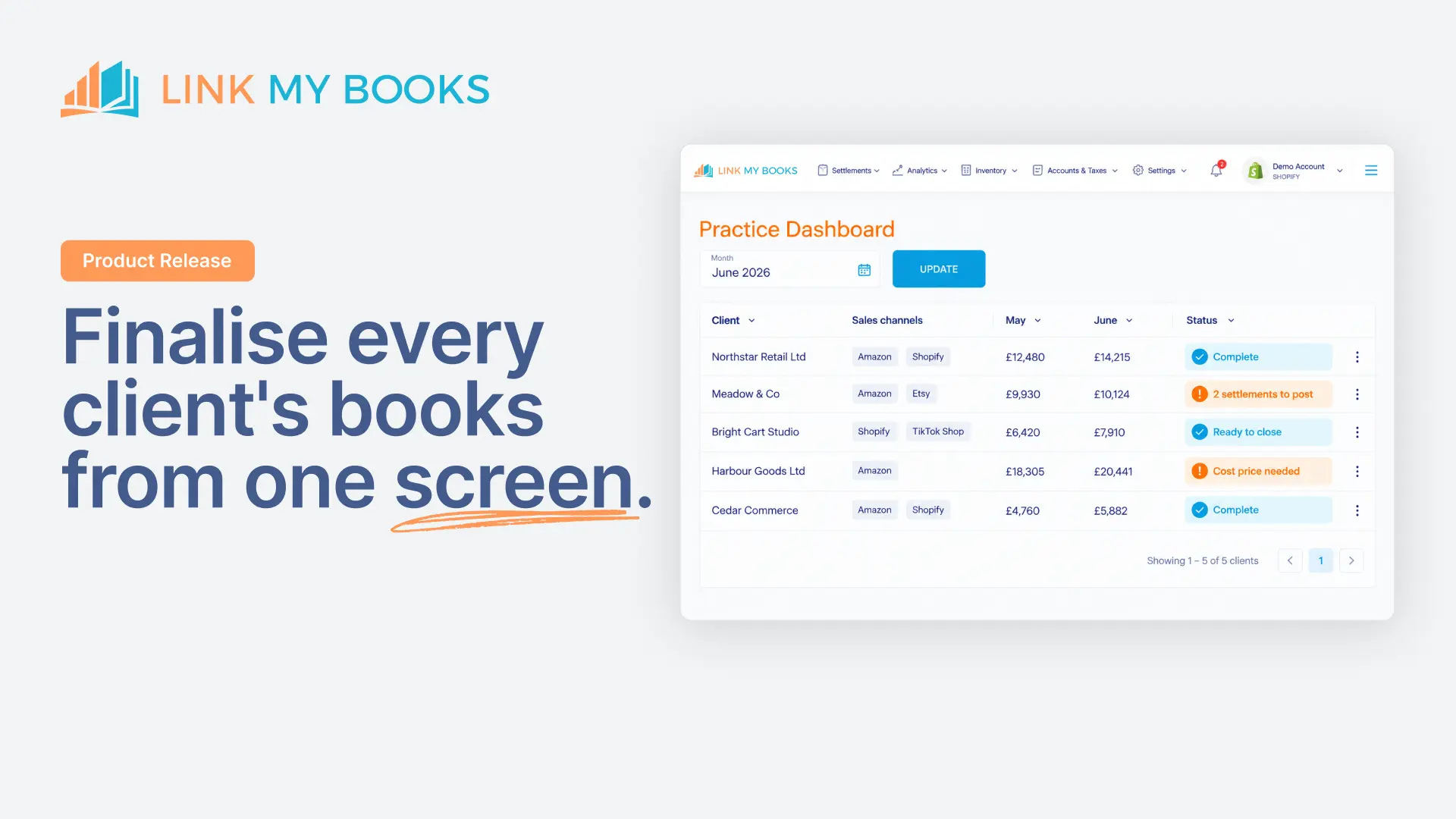
A strong client reporting workflow answers these questions consistently every month. That transforms reporting from a mere compliance exercise into a valuable commercial conversation, fostering stronger client relationships and demonstrating the accountant's expertise.
Building a Reporting Workflow That Scales Across Multiple Ecommerce Clients
One of the biggest challenges for growing accounting practices is maintaining consistency and reporting efficiency. If every accountant prepares reports differently, quality becomes difficult to maintain, and the practice struggles to scale. A scalable reporting workflow generally follows the same sequence for every ecommerce client, leveraging automated reports where possible.
Step 1: Verify Financial Data Thoroughly
Before producing any reports, it is paramount to confirm that marketplace settlements, fees, refunds, and payment processor activity have been accurately recorded. Reporting should never begin before reconciliation has been meticulously completed. This foundational step is crucial for ensuring the integrity of all subsequent reports.
Step 2: Review Exceptions and Anomalies
Identify unusual transactions before producing management reports. This proactive approach helps to catch potential errors or significant events that could skew financial interpretations.
Examples include:
- Large or unexpected refunds.
- Unusual or unexpected marketplace charges.
- Duplicate transactions that need correcting.
- Significant settlement timing differences.
- VAT anomalies requiring investigation.
Resolving these issues before reporting improves client confidence and significantly reduces follow-up questions, enhancing overall reporting efficiency.
Step 3: Produce Consistent Management Reports
Clients should receive reports in a familiar, standardized format every month. Consistency makes it easier for them to identify trends, compare performance over time, and understand their business's financial narrative. This also streamlines the internal process for the accounting firm.
Step 4: Add Commercial Context and Insight
The numbers alone rarely tell the full story. A concise commentary explaining significant movements, operational changes, or emerging trends often provides far more value than additional financial schedules. This contextualization transforms raw data into actionable intelligence, a key component of effective performance reporting.
Why the Preparation Stage Determines Reporting Quality
Many reporting issues originate long before reports are ever produced. If financial data requires extensive manual correction every month, reporting becomes slower, less reliable, and prone to human error. This is where reducing manual work becomes a critical objective.
Common preparation tasks include:
- Reconciling marketplace settlements against bank statements.
- Reviewing payment processor activity for accuracy.
- Accurately allocating marketplace fees to the correct categories.
- Checking VAT treatment for various transactions.
- Identifying and correctly categorizing refunds.
- Investigating discrepancies between platforms and bank accounts.
The more time accountants spend preparing data, the less time they have available to analyze performance and advise clients. Improving the quality of financial data at the beginning of the workflow creates better reporting at the end, highlighting the importance of workflow improvement and automated reporting benefits.
How Leading Ecommerce Accounting Platforms Support Reporting
Several ecommerce accounting platforms help accountants prepare financial information before reporting begins, significantly contributing to reporting automation.
- Entriwise focuses primarily on Amazon accounting automation and supports practices working with Amazon-focused ecommerce businesses.
- Dext Commerce helps collect and organize ecommerce financial information across multiple sales channels, allowing accountants to prepare more consistent bookkeeping records before reporting.
- Webgility combines ecommerce accounting with inventory and operational management, making it suitable for businesses requiring wider operational oversight and more complex operational requirements.
Each platform supports different types of ecommerce businesses depending on their operational complexity and specific needs.
Why Link My Books Strengthens the Reporting Workflow
The quality of client reporting fundamentally depends on the quality of the underlying bookkeeping. Link My Books helps improve that foundation by categorizing marketplace sales, fees, VAT, refunds, and settlement adjustments before posting structured summaries into Xero or QuickBooks. This significantly enhances the accuracy and consistency of data, which is vital for any robust client reporting workflow.
Instead of spending hours preparing marketplace data for reporting, accountants receive financial information that is already organized for accurate bookkeeping. This creates several advantages throughout the reporting process:
- More consistent financial data across all reporting periods.
- Faster month-end reporting cycles.
- Fewer reconciliation issues during review.
- Greater confidence in the accuracy of management reports.
- More time available to provide valuable commercial advice.
Rather than changing how accountants deliver reports, Link My Books helps ensure those reports begin with cleaner, more reliable financial information, embodying the principles of client reporting optimization. For accountants looking to streamline their processes, integrating such reporting software can be a game-changer. Link My Books Integration with Xero can further enhance this process.
Turning Reports into Better Client Conversations
A good client reporting workflow does more than produce accurate figures. It creates opportunities for meaningful conversations that build trust and demonstrate value. Rather than emailing a profit and loss statement with little explanation, ecommerce accountants using Xero or QuickBooks can use reporting to help clients understand what is happening inside their business.
For example:
Highlight Trends Instead of Individual Numbers
Clients are often more interested in movement and trajectory than absolute values.
- Has gross margin improved or declined over the quarter?
- Have marketplace fees increased as a percentage of sales?
- Are refunds becoming more frequent, indicating a product or service issue?
Identifying trends helps clients focus on actionable insights rather than simply reviewing static financial statements. This approach aligns with modern performance reporting standards.
Explain the Reason Behind Changes
Reporting becomes significantly more valuable when accountants provide context.
- A decrease in profit could be directly linked to higher advertising costs or increased cost of goods sold.
- An increase in fees may reflect growth in sales volume rather than reduced profitability, which is a positive signal.
Providing this explanation helps clients make better commercial decisions and understand the nuances of their business performance.
Keep Reporting Consistent
Changing report layouts every month makes it difficult for clients to compare performance over time. Using the same structure creates familiarity and allows trends to become much easier to identify. This consistency is a cornerstone of client reporting best practices.
Common Reporting Mistakes Ecommerce Accountants Should Avoid
Even practices with strong bookkeeping processes can reduce the value of their reporting through avoidable mistakes. Recognizing and preventing these errors is crucial for effective workflow improvement.
Reporting Before Reconciliation is Complete
Reports are only as reliable as the financial data behind them. If marketplace settlements, refunds, or fees have not been fully reconciled, management reports can present an incomplete or misleading picture of business performance. This undermines the entire client reporting workflow.
Giving Every Client the Same Reports
Different ecommerce businesses monitor different metrics. A brand selling exclusively through Shopify may have different reporting priorities from a business trading across Amazon, eBay, and WooCommerce. Maintaining a consistent reporting framework while tailoring commentary to the client creates far more valuable reporting. This personalized approach is key to effective client reporting optimization.
Focusing Only on Compliance
Many monthly reports stop once the bookkeeping is complete. However, the greatest value often comes afterwards. Helping clients understand why performance changed and what actions they should consider strengthens the accountant-client relationship far more than simply delivering financial statements. This advisory role is where ecommerce accountants using Xero or QuickBooks truly shine.
How Link My Books Supports Better Client Reporting
Reliable reporting starts with reliable bookkeeping. When marketplace transactions require extensive manual correction, reporting becomes slower and less consistent, increasing manual work.
Link My Books helps improve the reporting workflow by preparing structured accounting summaries before they reach Xero or QuickBooks. Sales, marketplace fees, VAT, refunds, and settlement adjustments are categorized automatically, reducing manual work and the amount of preparation required before month-end reporting begins. This is a prime example of automated reporting benefits.
For ecommerce accountants using Xero or QuickBooks, this creates several practical benefits:
- More consistent financial data across every reporting period.
- Less time spent resolving reconciliation queries.
- Faster preparation of management accounts, improving reporting efficiency.
- Greater confidence in the accuracy of client reports.
- More capacity to provide commercial advice rather than administrative bookkeeping.
Customer support is delivered by qualified accountants who understand both ecommerce bookkeeping and the reporting challenges accountants face. That provides additional confidence when onboarding new ecommerce clients or resolving more complex reconciliation scenarios. For further insights on streamlining operations, consider exploring Link My Books Features.
FAQ
What makes a good client reporting workflow for ecommerce accountants?
A strong client reporting workflow begins with accurate bookkeeping rather than report creation. Marketplace settlements, fees, refunds, and payment processing activity should all be reconciled before reports are prepared. From there, accountants should follow a consistent process that includes reviewing exceptions, producing standardized management reports, and providing commentary that explains significant changes in business performance. The objective is not simply to produce financial statements but to help clients understand what the numbers mean and how they can use them to make better decisions, ensuring effective performance reporting.
Why is reporting more complicated for ecommerce businesses?
Ecommerce businesses often sell across multiple marketplaces, each with different settlement structures, fee models, and reporting formats. Marketplace payouts rarely match sales values because deductions for fees, refunds, and taxes have already been applied. If these adjustments are not recorded correctly, financial reports may not accurately reflect business performance. Building a structured reporting workflow ensures the financial information presented to clients is both accurate and commercially useful, often requiring specialized reporting software.
How does Link My Books improve client reporting?
Link My Books improves reporting by improving the quality of the underlying bookkeeping. It categorizes marketplace sales, fees, VAT, refunds, and settlement adjustments before posting structured summaries into Xero or QuickBooks. This reduces manual work while helping accountants produce cleaner management reports with greater confidence. By spending less time correcting bookkeeping records, accountants have more time available to analyze performance and provide valuable commercial insight, leading to significant automated reporting benefits.
Should every ecommerce client receive the same reports?
Not necessarily. A consistent reporting structure is valuable because it makes trends easier to identify and simplifies internal workflows. However, the commentary and insights should reflect each client's business model, sales channels, and commercial priorities. Standardizing the reporting process while tailoring the interpretation allows accountants to deliver consistent service without making every report feel generic. This customized approach is a key aspect of client reporting best practices.
The best client reporting workflows do more than deliver accurate numbers. They give ecommerce businesses confidence in their financial information and provide the insight needed to make informed commercial decisions. By combining consistent reporting processes with accurate marketplace data, accountants can spend less time preparing reports and more time helping clients understand what drives profitability, cash flow, and growth. This focus on value-added services elevates the role of ecommerce accountants using Xero or QuickBooks.
If you'd like to see how Link My Books supports faster, more reliable reporting for ecommerce accountants using Xero or QuickBooks, book a personalized demo today.



.webp)



.png)