


This article provides general information only and does not constitute tax advice. For advice on your specific situation, speak with a qualified accountant or HMRC.
eBay can report certain seller data to HMRC under UK digital sales reporting rules, but that does not automatically mean you owe extra tax. It means you need clean records, and you need to know whether HMRC would view your activity as personal selling or trading.
Key Takeaways from this Post
eBay reports seller sales data to HMRC if you cross reporting thresholds, and HMRC can use that data to check whether you should have declared taxable income.
For UK residents, eBay reports if you hit either threshold in a calendar year: 30+ sales transactions or £1,707+ in total sales (after certain exclusions).
Tools like Link My Books help because your eBay payouts arrive net of fees, refunds, and taxes, and that mismatch causes most of the bookkeeping errors that later become HMRC headaches.







Quick reference table
2026 Update: HMRC “Side Hustle” Reporting and What It Means for eBay Sellers
You will still see people call this the “side hustle tax,” but it’s more accurate to call it platform reporting. eBay confirms that, for UK residents, it must report sales transactions and certain personal or business information to HMRC if you meet either reporting threshold within the calendar year. eBay also states that reporting starts annually and that it provides you with a copy of the data it reports.
Do You Have to Declare All eBay Income to HMRC?
No. You declare taxable income, not every pound that passes through your eBay account.
If you sell goods you bought or made with the intention to sell for profit, you are “probably trading,” and you generally need to tell HMRC if your total trading income goes above the £1,000 trading allowance for the tax year (April 6 to April 5).
HMRC also points out that some platforms show income by calendar year, so you may need to convert the numbers to the tax year before you use HMRC tools or file.
Why HMRC Updated Policy for Private eBay Sellers
HMRC tightened its focus on online selling because marketplace data now gives it a clearer view of who sells regularly, at what volume, and for how much. This does not turn casual clear-outs into taxable income overnight, but it does reduce the “invisible zone” that used to exist for small-scale sellers.
If your eBay activity looks consistent and profit-driven, you need records that clearly show what you sold, what it cost you, and what you actually earned.
HMRC Can Match Platform Data Against Tax Returns
Before platform reporting, HMRC often relied on audits, tip-offs, or obvious mismatches to spot undeclared trading income. Now, eBay can send HMRC an annual snapshot of seller activity once you cross reporting thresholds. That gives HMRC a clean dataset to compare against what you report on Self Assessment.
In practice, this creates two common problems:
- You file, but the numbers do not line up: Your tax return might reflect net payouts, while platform data reflects gross sales (or excludes certain VAT elements). That mismatch can trigger questions even if you did nothing wrong.
- You do not file, but your activity looks like trading: If you sell regularly and for profit, platform data can make it easier for HMRC to identify unreported trading income and ask you to explain it.
This is why record-keeping matters more than ever. You want to clearly show: what you sold, whether it was personal or trading stock, your costs, and your actual profit. When you can evidence that cleanly, HMRC checks become easier to resolve.
The Side Hustle Economy Blurred the Line Between Hobby and Business
eBay selling often starts innocently: decluttering, selling old baby items, or flipping something you no longer need. The issue is what happens next. Many sellers reinvest the money, start sourcing items specifically to resell, and end up with a regular pattern of selling that looks like a business even if they still think of it as “just a side thing.”
HMRC does not judge this based on your intention alone. It looks at your behavior. If you buy items with the aim of reselling for profit, sell frequently, or run the activity in a consistent way, HMRC can view it as trading. That change matters because it shifts you from “private sales” logic to “declare trading income and calculate profit” logic.
The Personal Sales vs Trading Line Drives Most Mistakes
Most confusion comes from people using the wrong shortcut.
- Mistake 1: “eBay reported me, so I must owe tax.” Reporting is not the same thing as tax due. Reporting only means HMRC can see the activity and may check whether it should have been declared.
- Mistake 2: “I’m a private seller, so I never owe tax.” If you buy to resell or run consistent profit-driven activity, HMRC can treat it as trading even if you do not have a registered business name.
The safest approach is to separate your activity early: personal-item clear-outs vs trading stock. Then keep records that support that classification. If you trade, base your numbers on profit, not payout totals. That is where most sellers get tripped up.
What to Do if You’ve Received an HMRC eBay Letter
Start simple and stay calm.
- Verify the letter: Use official HMRC channels and do not call numbers or click links that look suspicious.
- Pull your records for the dates requested: Download eBay transaction and payout data for that period.
- Classify your activity: Separate personal-item sales from trading activity (buying to resell, making products to sell, repeated profit-seeking).
- Check the £1,000 trading allowance: Add up trading income across platforms for the UK tax year (April 6 to April 5).
- Fix gaps fast: If you should have filed, register and submit/adjust Self Assessment with support from a qualified accountant.
How Link My Books Simplifies eBay Tax Filing
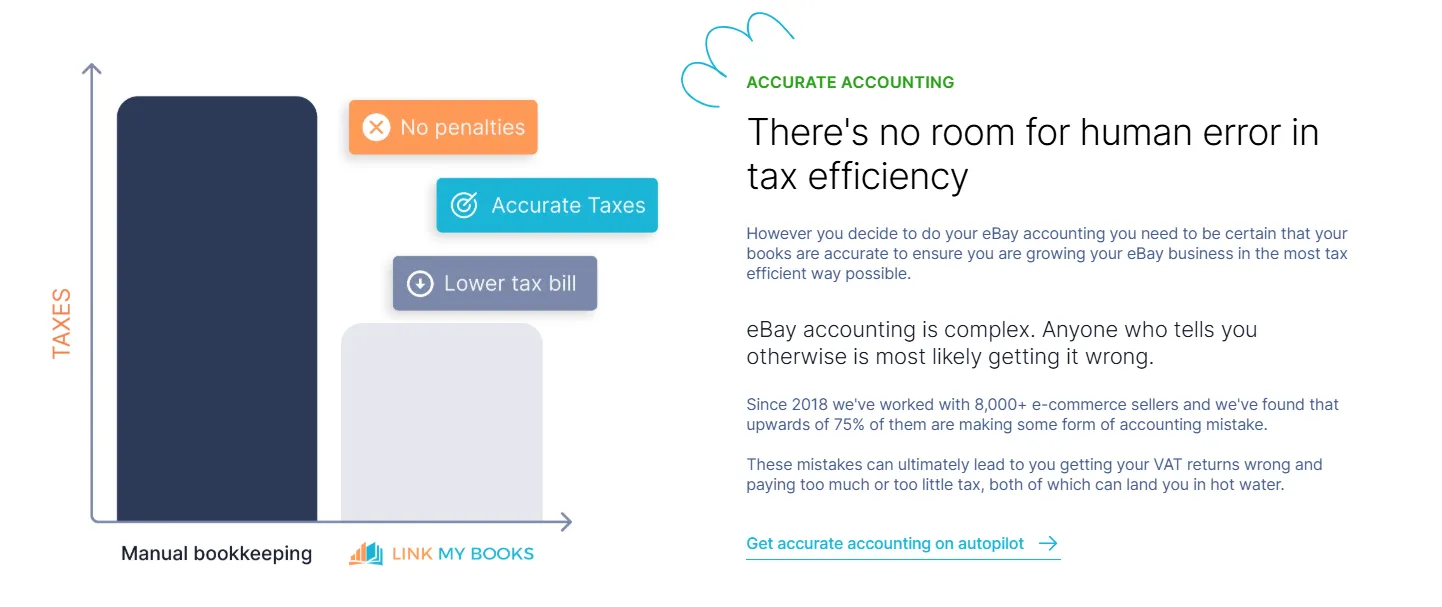
eBay tax filing gets messy fast because your bank deposit never equals your gross sales. eBay pays you out after fees, refunds, and tax adjustments, so if you base your numbers on payouts or dashboard snapshots, you can end up underreporting income, overstating profit, or missing fee and refund deductions.
Link My Books fixes this by turning eBay activity into clean, reconciled accounting entries inside Xero or QuickBooks, so you file from accurate books instead of stitched-together spreadsheets.
What Link My Books does for eBay sellers
- Pulls the right eBay data automatically: Imports sales, fees, refunds, and taxes so you stop manually downloading settlement-style reports and cleaning columns.
- Posts clean summaries into Xero or QuickBooks: Creates structured entries you can trust at month-end, instead of hundreds or thousands of messy lines.
- Makes payout reconciliation fast: Matches the eBay payout to your bank feed by accounting for what changed the net amount (fees, refunds, chargebacks, tax treatment).
- Keeps fees and refunds from getting missed: Captures the costs that most sellers forget to deduct, which can inflate your taxable profit if you track “sales only.”
- Improves VAT consistency: Applies consistent tax logic across transactions so you reduce VAT mistakes and avoid overpaying due to misclassified fees or tax-inclusive totals.
- Supports scaling without breaking your books: As order volume rises, the system keeps the same structure, which makes it easier for an accountant to review and for you to stay audit-ready.
Practical benefits when you file
- More accurate profit figures: You base returns on actual revenue and deductible costs, not net payouts.
- Less time spent on admin: You cut hours of monthly spreadsheet clean-up and reconciliation.
- Cleaner evidence trail: If HMRC asks questions, you can point to consistent postings and supporting breakdowns instead of ad-hoc exports.
- Lower overpayment risk: When fees, refunds, and tax treatment stay consistent, you reduce the chance of paying tax on money you never kept.
If you want your ecommerce accounting to stay clean and your eBay numbers to reconcile without manual work, Link My Books gives you a reliable path from eBay activity to Xero or QuickBooks, ready for filing.

👉Get started with Link My Books and see how much time you can save on eBay bookkeeping.
How to File Your eBay Taxes to HMRC
There are a few common filing paths, depending on what you sell and why you sell it:
- Path A: Personal-item sales only: Usually no income tax, but keep evidence that items were personal possessions.
- Path B: Trading as a side hustle: File Self Assessment if your trading income exceeds £1,000 for the tax year.
- Path C: VAT-registered seller: VAT rules apply, and you need clean VAT tracking on sales, fees, and imports.
Now, the practical steps:
Step 1: Pull the Right eBay Reports for the Right Dates
Use the Correct Date Basis
- HMRC income tax uses the UK tax year: April 6 to April 5.
- eBay reporting thresholds use the calendar year: January 1 to December 31.
Do not mix these up. It causes false “I’m under the threshold” assumptions.
Reports to Download
- Transaction-level sales report: Shows what sold, when, and for how much.
- Payout report: Shows what eBay paid you and when.
- Fees and charges records: This matters for profit and for accurate VAT treatment, especially with UK eBay seller fees.
Step 2: Separate Personal Sales From Trading Activity
Use this quick classification checklist:
- Personal selling signals: One-off clear-outs, old household items, no intent to profit, no repeat sourcing.
- Trading signals: Buying inventory to resell, making items to sell, regular volume, pricing for margin, repeat patterns.
HMRC guidance directly calls out that selling goods you bought intending to sell for a profit points toward trading, and that you need to consider the £1,000 trading allowance across trading activities.
Step 3: Calculate Taxable Profit the Way HMRC Expects
For trading activity, focus on profit, not payout:
- Revenue: Gross sales (not just what hit your bank).
- Costs: Inventory, shipping you paid, packaging, platform fees, refunds, other allowable business expenses.
- Result: Taxable profit (what income tax applies to).
This is where sellers go wrong when they rely on net payouts alone.
Step 4: File Self Assessment and Keep Clean Records
- File Self Assessment if required, based on your overall trading income and circumstances.
- Keep supporting records so you can explain your numbers if HMRC asks.
HMRC also notes that some platforms show income by calendar year, so you may need to work out tax-year income before you use HMRC tools or file.
What Happens if I Don’t Declare My eBay Earnings?
If you should have declared taxable income and you did not, HMRC can open an enquiry and ask you to explain your activity and numbers. The risk increases when platform-reported figures do not line up with your Self Assessment. The fix usually costs less when you act early and show clean records.
Key Taxes to Know for eBay Sellers in the UK
Capital Gains Tax
CGT can apply in specific scenarios, including certain personal possessions sold at higher values. HMRC’s guidance includes examples where selling a personal possession above certain thresholds can trigger reporting considerations.
VAT
If you run a VAT-registered business, VAT compliance matters across sales, refunds, fees, and imports. Also, marketplace VAT handling can affect what gets reported and how totals get calculated. eBay states its yearly sales total for reporting excludes items such as VAT collected and remitted by eBay and VAT charged on fees, among other exclusions.
Income Tax
If HMRC views your activity as trading, your profits can fall under income tax rules, and the £1,000 trading allowance becomes a key threshold for whether you need to tell HMRC.
Tax type cheat sheet
What Is HMRC’s “Badges of Trade” and Why It Matters for eBay?
This is the lens HMRC uses to decide whether your activity looks like a business.
Repeated, profit-driven buying and selling looks like trading, even if you call it a hobby. If you buy inventory to resell, sell regularly, or price for margin, you should treat your activity like a business for record-keeping and taxes.
FAQ on HMRC and eBay
How Do You Know if Your HMRC Letter Is Genuine?
Use official HMRC contact routes and verify reference numbers. Avoid calling phone numbers printed on suspicious letters or clicking QR codes and links you did not request. Scammers target sellers during tax-season headlines.
How Much Can You Sell on eBay Without Paying Tax in 2026?
Do not confuse “platform reporting thresholds” with “tax owed.”
- eBay reports to HMRC if you hit 30+ transactions or £1,707+ in total sales as defined by eBay’s reporting calculation.
- HMRC focuses on whether you are trading and whether your trading income exceeds the £1,000 trading allowance for the tax year.
You can cross eBay’s reporting threshold and still owe no tax if the activity does not create taxable profit or does not count as trading. You can also stay under eBay’s reporting threshold and still owe tax if you trade profitably. Keep records either way.
Does eBay Send VAT to HMRC?
It depends on the transaction type and VAT responsibility. For reporting calculations, eBay states it excludes VAT collected and remitted by eBay and VAT charged on fees when it calculates total sales for the year under UK digital sales reporting.
If you are VAT-registered, you still need correct VAT records for your own VAT returns.
Do I Need to Tell HMRC if I Sell on eBay?
You may need to tell HMRC if you earn income through online marketplaces, including selling goods, providing services, or creating online content. If you sell goods you bought intending to sell for profit, you are probably trading, and you generally need to tell HMRC if your total trading income goes above the £1,000 trading allowance for the UK tax year.
What Is the “30 Transactions” Rule?
It is a platform reporting trigger, not a “you are now taxable” rule. eBay states it reports if you complete 30 or more sales transactions in a calendar year. It also explicitly notes that reporting does not change your tax and reporting obligations.
Final Words on HMRC for eBay Sellers
eBay can report your activity if you cross reporting thresholds, and HMRC can compare that to what you file. That does not mean you should panic. It means you should stop relying on net payouts and memory when you do your books.
If you sell on eBay, your books shouldn’t depend on manual payout exports, settlement-style report downloads, and spreadsheet cleanups. Your eBay accounting software should handle that work for you.
Link My Books pulls your eBay sales and payout data and posts clean, reconciliation-ready summaries into Xero or QuickBooks, so you can match payouts faster, stay on top of fees, refunds, and taxes, and close the month without guesswork, making your eBay bookkeeping fully automated.
Get started with Link My Books and see how much time you can save on eBay bookkeeping.
Data Sources and Methodology
This guide combines official HMRC guidance and eBay UK regulatory disclosures to explain what UK digital sales reporting is, what triggers reporting, and what it means for your tax responsibilities.
Official HMRC sources:
- HMRC guidance on whether you need to tell HMRC about income from online platforms
- HMRC news update for online sellers (policy context and intent)
Official eBay sources (primary):
- eBay UK Digital Sales Reporting page (thresholds, definitions, and exclusions used in eBay’s reporting totals)
How we define key terms in this article:
- Platform reporting: eBay sharing seller sales data with HMRC when reporting thresholds are met, based on the calendar year (January 1 to December 31).
- Tax obligations: what you must declare and pay based on UK tax rules (typically assessed on the UK tax year: April 6 to April 5). Reporting does not automatically create a tax bill.
- Trading vs personal sales: a practical classification based on HMRC’s guidance (for example: intent to profit and repeated selling activity), not on whether eBay reports you.
Why you may see different totals across tools and reports:
- eBay reporting totals can exclude items such as VAT collected and remitted by eBay and VAT charged on fees (per eBay’s disclosure). That means reported “total sales” may not match your bank deposits or dashboard summaries exactly.
- Your bank payouts reflect net funds (after fees, refunds, and other adjustments). Your tax position depends on taxable profit, not payout amounts.
Last verification date:
- We verified all source pages on February 20, 2026.
Most recent official reporting period referenced:
- eBay’s UK reporting rules describe thresholds and reporting based on the calendar year and annual reporting cycles, as published on eBay’s UK Digital Sales Reporting page.


.webp)



.png)