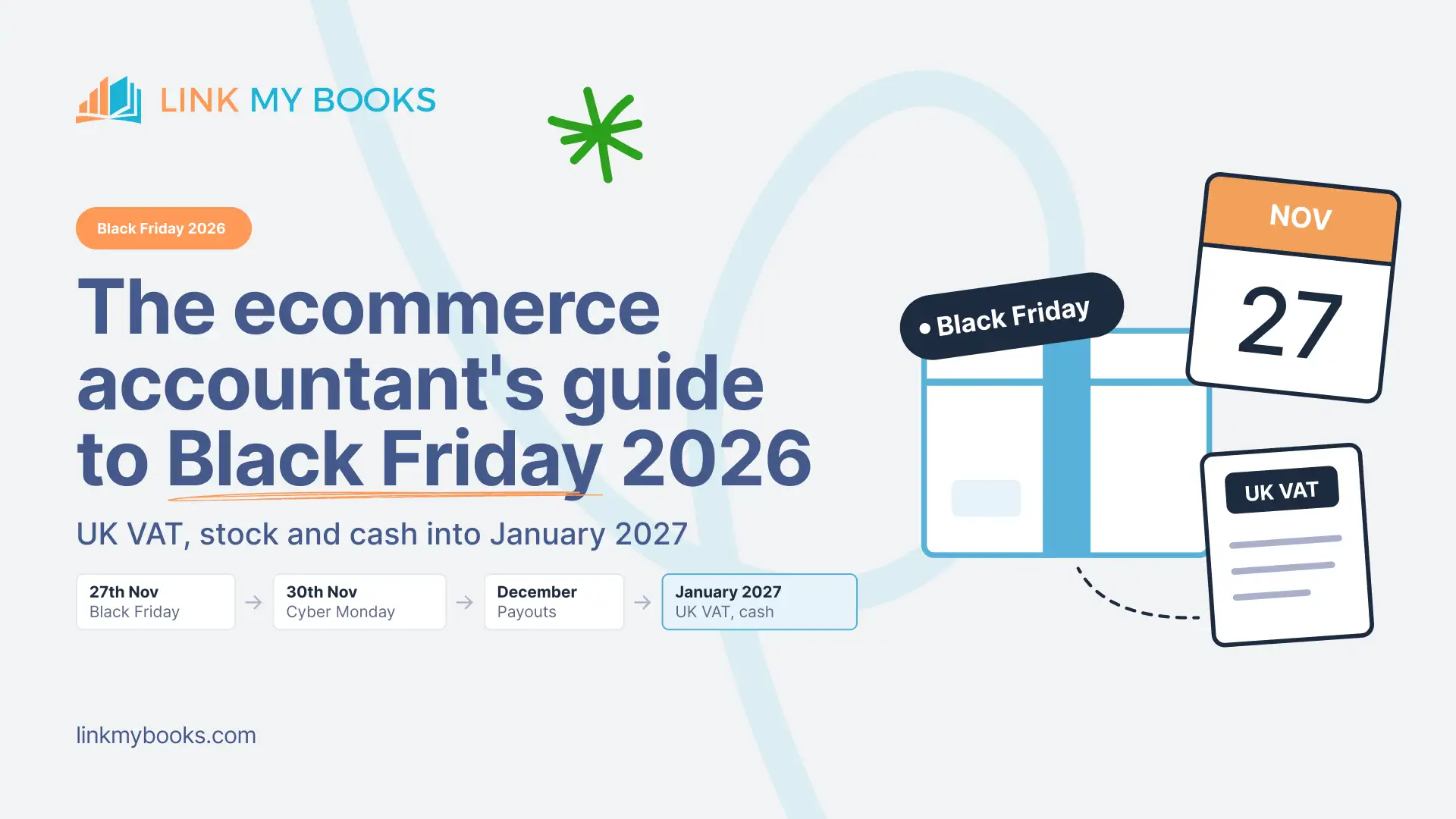
Black Friday 2026 moves your ecommerce clients' stock, UK VAT and cash in different months, and Amazon won't pay for some of it until December. Here are seven checks to run across your client book before January 2027.
Key Takeaways from this Post
Good numbers start with cost of goods sold. Without it set up before the spike, margin figures for the period mean little.
UK VAT bills can run higher than usual. Stock bought in an earlier quarter leaves these sales with fewer purchases to offset
January cash isn’t all free cash. Much of it is likely to already be owed in UK VAT, and clients need to know what’s left for stock.







A sale your client makes on Amazon on Black Friday may not reach their bank until December.
The stock behind it left the balance sheet in November. That stock was bought before the sale, so the purchase and the sale can fall in different UK VAT quarters. And by January, your client will want to know whether it made them any money.
This guide covers where Black Friday 2026 shows up in your ecommerce clients' books, and the seven checks that get each client's numbers right.
How will Black Friday 2026 show up in your ecommerce clients' books?
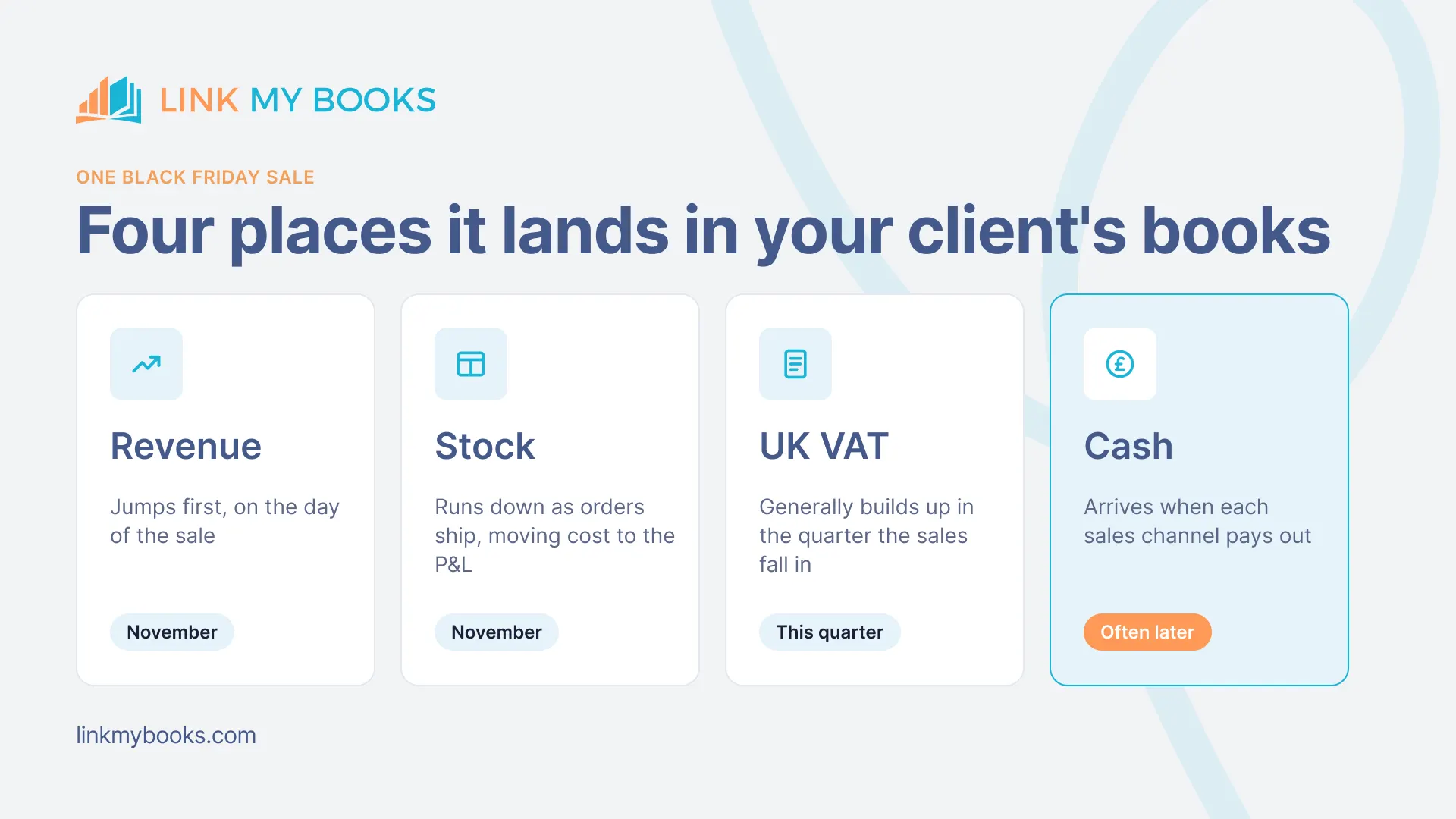
Every Black Friday sale lands in four places: revenue, stock, UK VAT and cash. Each one moves on a different timetable, so the full picture often isn't clear until the new year.
Revenue jumps first. Stock runs down as orders ship, moving cost from the balance sheet to the P&L. The UK VAT on those sales generally builds up in the quarter they fall in, and the cash arrives when each sales channel pays out, which isn't always the same month.
Clients will want those numbers quickly. What they sold over this period shapes what they order next.
Cyber Monday is part of the same picture. It carries the spike into a new week and, for clients selling on Amazon, into a new month of payouts.
Is cost of goods sold set up before the sales spike?
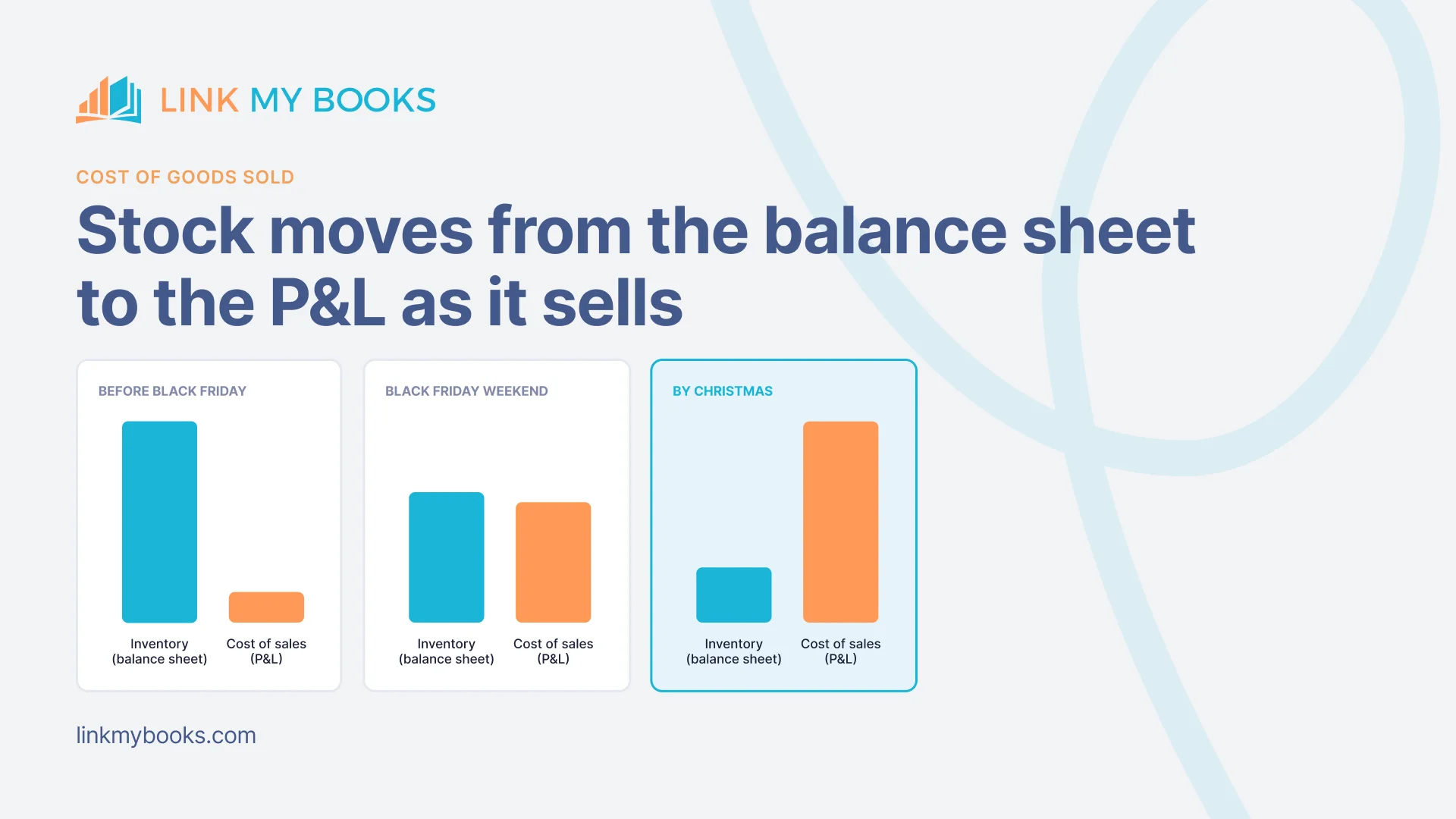
Without cost of goods sold, a client's P&L shows sales minus fees, not profit. After a Black Friday spike that gap gets wider, because so much more stock has sold.
Tracking cost of goods sold matches the cost of each unit to the period it sells in. Stock stays on the balance sheet as an asset until it's sold, then moves into cost of sales. Without that, the inventory balance never goes down, and November looks far more profitable than it was.
A few things are worth checking before 27 November. Are product costs entered for every product each client sells? Are all supplier purchase invoices going to the same inventory asset account? If a client sells on Shopify, are their product costs already held there?
Margin by channel, return on investment and the value of stock held in Amazon's warehouses all depend on those costs being right. So do the year-end accounts, and anything a lender or investor sees.
Counting units sold and posting cost of goods sold journals by hand is slow and error-prone at marketplace volumes. Black Friday multiplies those volumes, and it's hard work to hand to a junior member of the team.
Our COGS tracking webinar on Wednesday 2 December walks through setting it up, step by step.
Which clients are ready to process first?
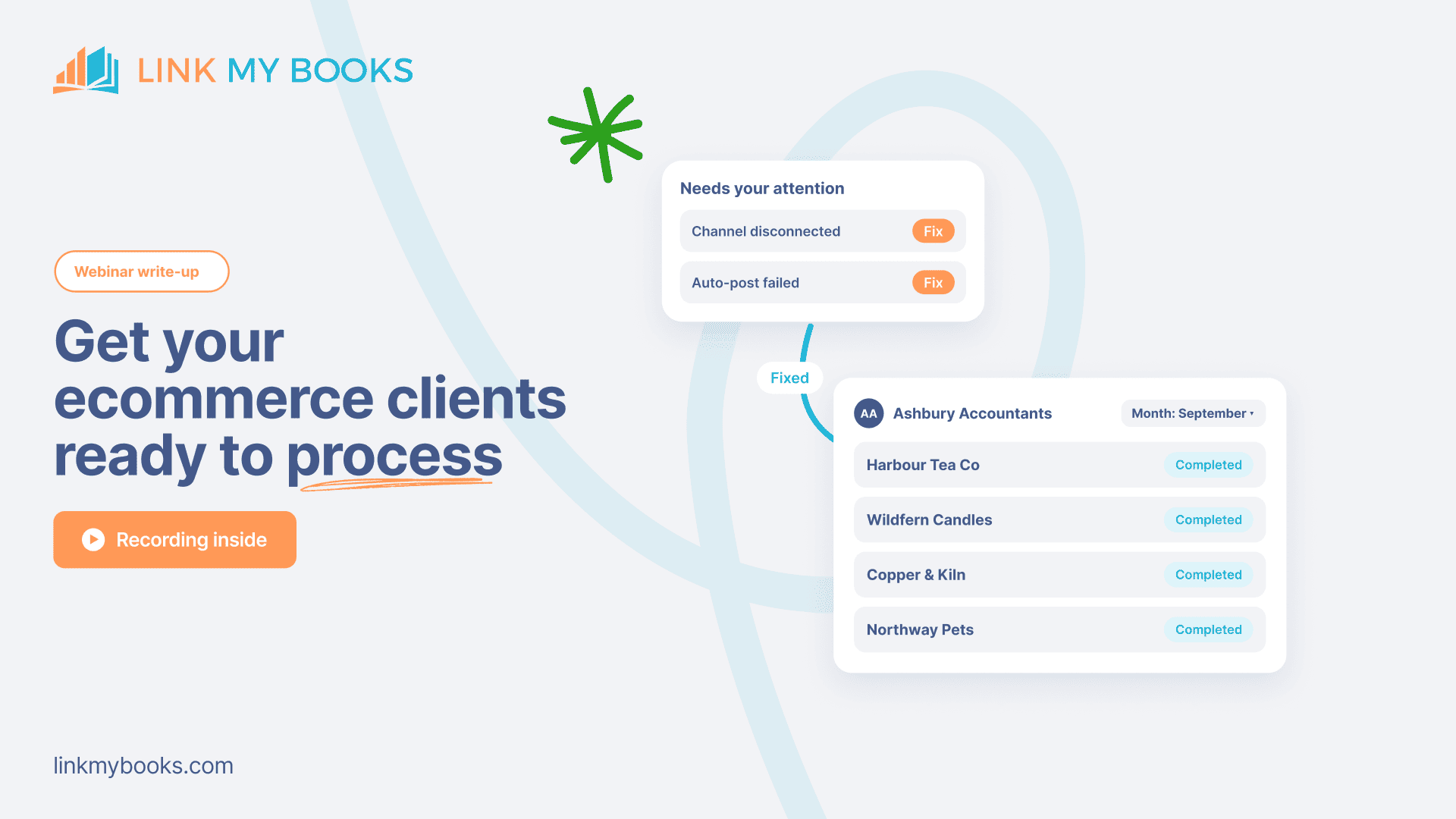
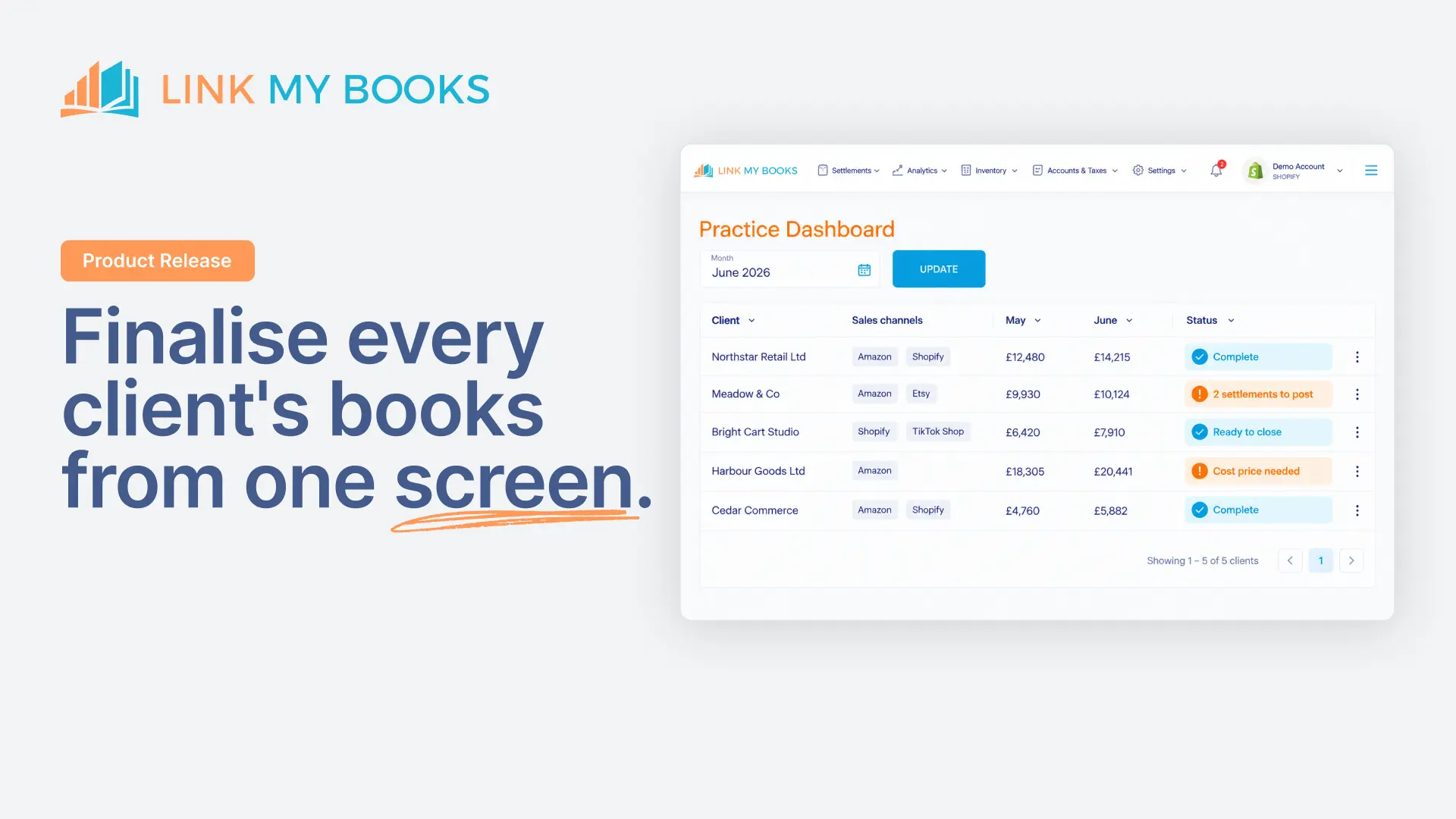
After the spike, every ecommerce client wants their numbers at once. The quickest way through is knowing which clients are ready to process, and which are missing sales data, before you check anyone's ledgers.
Missing sales data can come from a sales channel that isn't connected. If a client started selling on a new channel for Black Friday, it may not be connected yet. Spotting that early stops a gap turning up days before a return is due.
Once a client's data is in, management reports can go out quickly. Clients will want them soon after the peak, to see how the period performed.
Our webinar replay on seeing which clients are ready to process shows how to check every client’s status in one place.
Do you know each client's margin per sales channel and product line?
Clients selling on several channels will want to know where the profit came from, not only where the sales did. That needs margin per channel, and margin per channel only works once cost of goods sold is in. Without it, a channel P&L shows revenue and fees, not true margin.
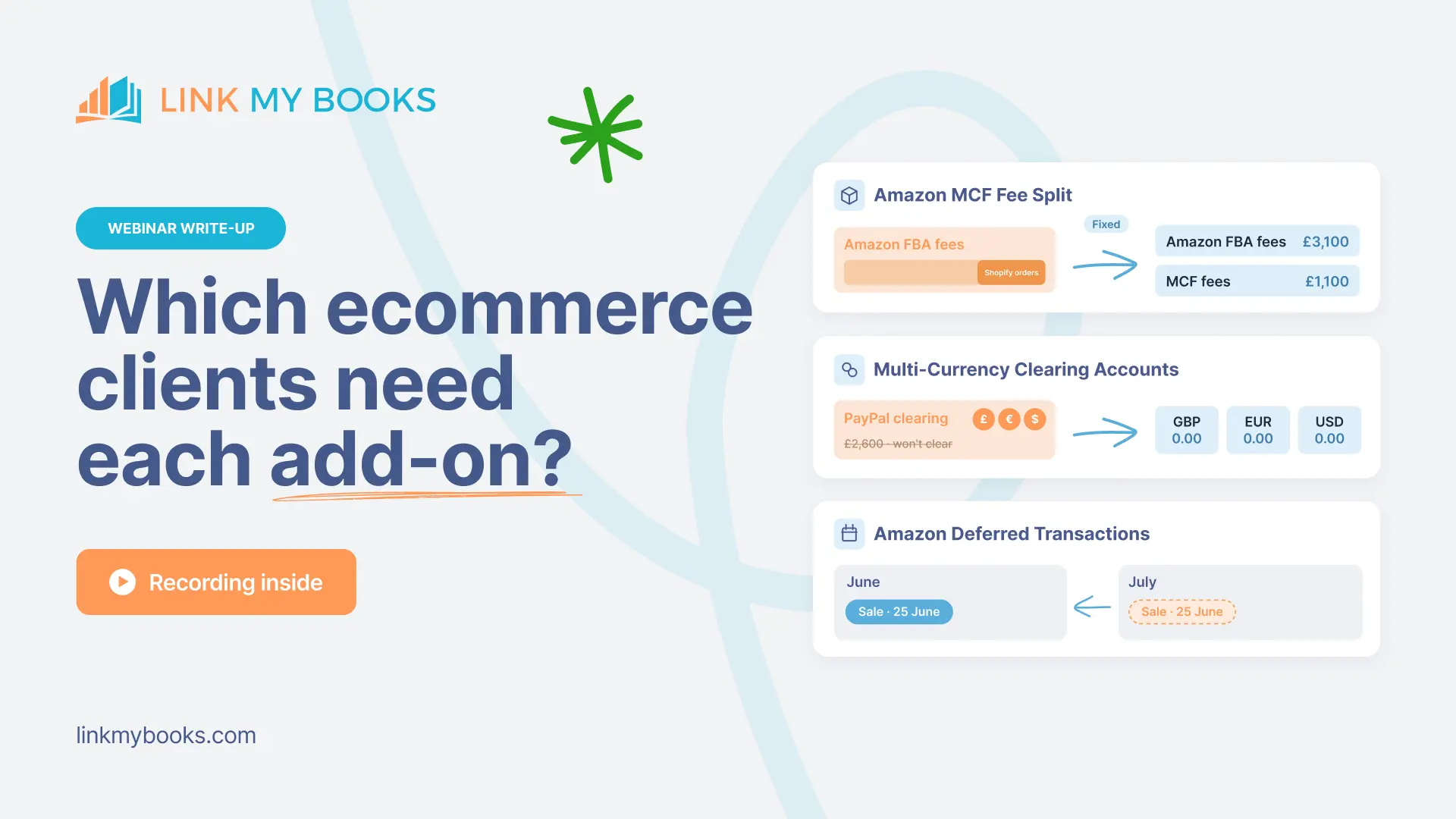
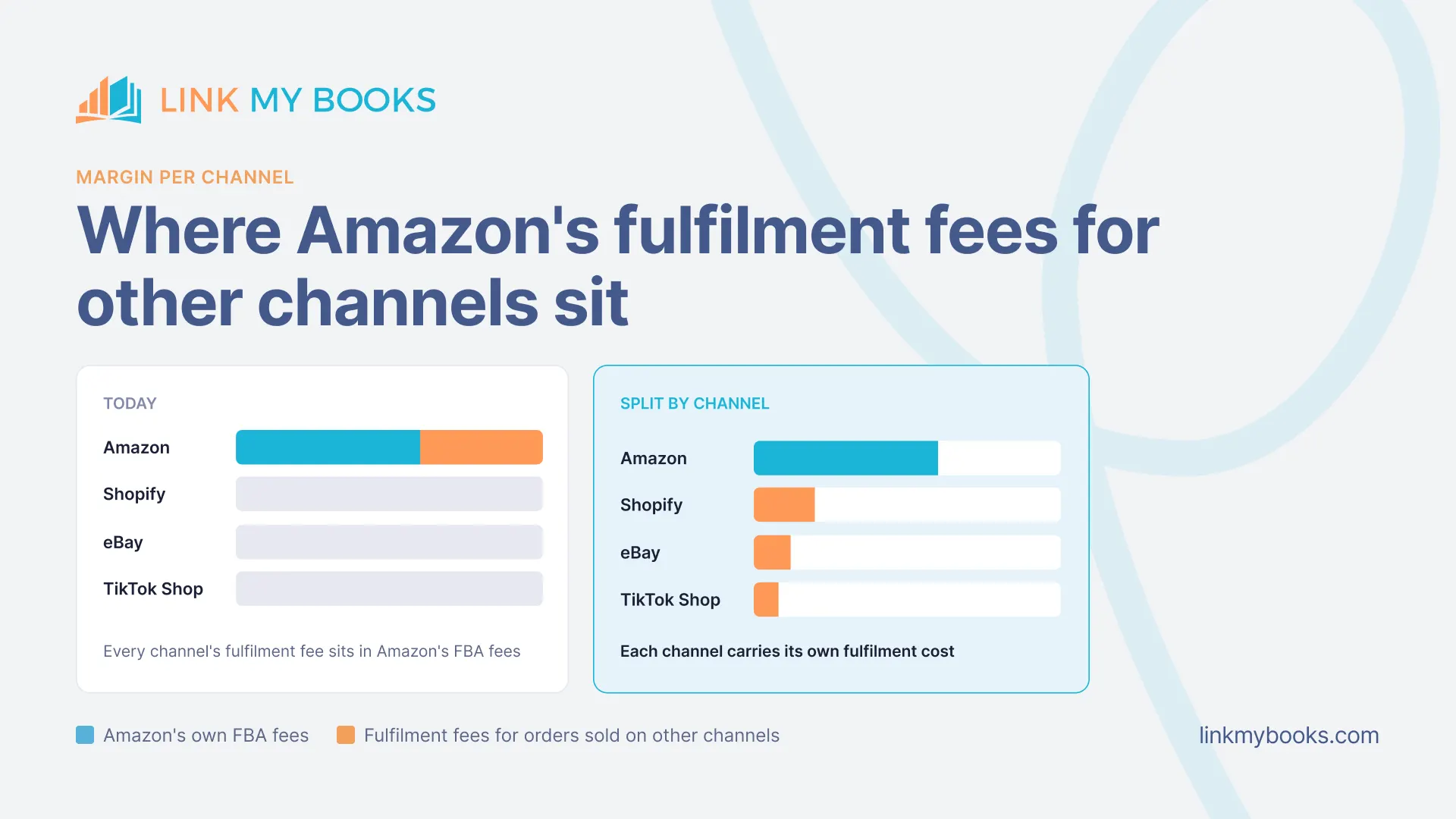
Amazon Multi-Channel Fulfilment can skew it further. When Amazon ships a client's Shopify, eBay or TikTok Shop orders from their FBA stock, the fee is reported inside Amazon's FBA fees. Amazon looks less profitable than it is, and the other channels look better, because their fulfilment cost sits somewhere else.
If a client uses Multi-Channel Fulfilment, Black Friday puts far more orders through it. The more orders it ships, the bigger that distortion gets.
The same goes for product lines. Splitting cost of goods sold by product group shows which lines carried the peak, and which sold well but made little.
Our webinar replay on three ecommerce accounting add-ons shows how fulfilment fees can be split out by channel.
Why can Amazon's Black Friday sales land in December's books?
Amazon doesn't pay out on the day of the sale. It holds the money until seven days after delivery, known as DD+7, so sales made late in a month are often paid out in the next one.
Over Black Friday and Cyber Monday, that can push a share of November's Amazon sales into December's payouts. November's revenue then looks understated, and December's overstated.
That matters beyond the P&L. Revenue in the wrong period can mean paying too much or too little UK VAT. It also skews margin, return on ad spend and customer acquisition cost for the month that matters most.
Seller Central only shows what's held back at one point in time. Building a month-by-month view from it by hand doesn't scale across a client book.
Why could your clients' UK VAT bill be higher this quarter?
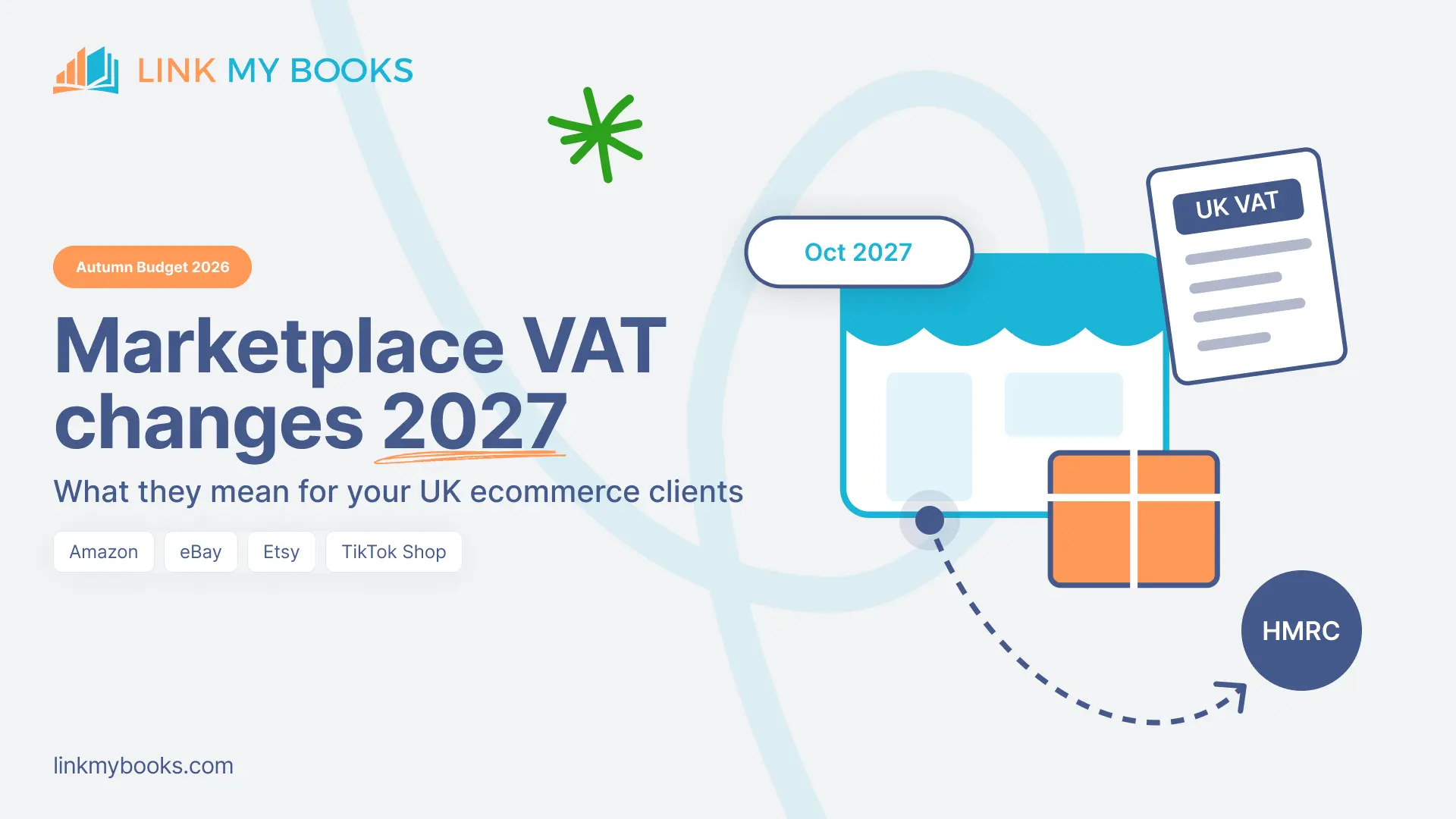
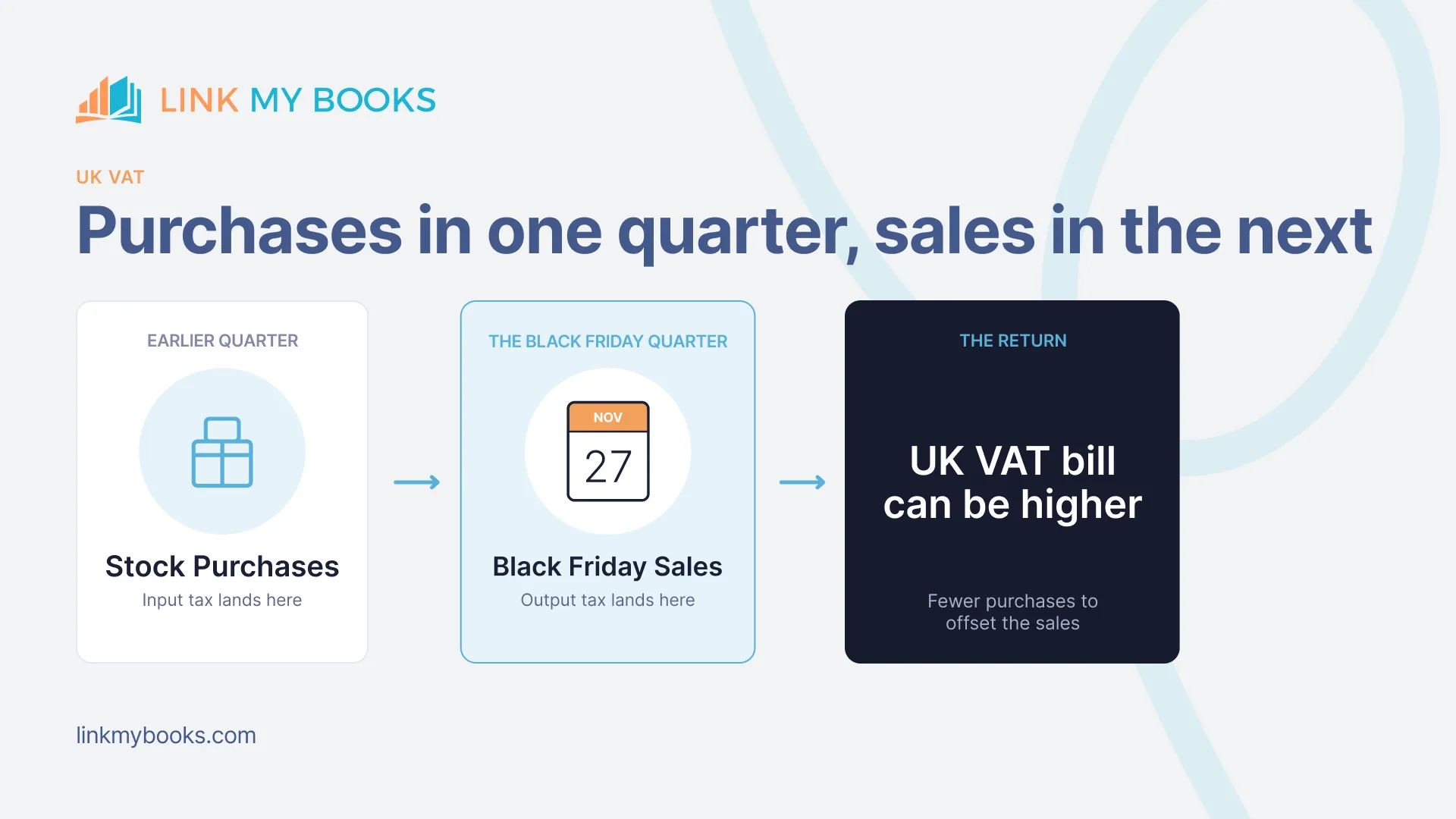
For clients on quarterly UK VAT returns, the quarter that takes in November and December is likely to carry a much bigger output tax figure. The input tax doesn't rise with it.
The stock sold over Black Friday was bought in advance, so those purchases sit in an earlier quarter. With the sales in one quarter and the purchases in another, the UK VAT bill can be higher than a client expects.
The Amazon timing gap comes back here too. Whether late-November sales paid in December land in the right UK VAT quarter depends on where each client's quarter ends.
It's worth raising early. A rough figure in December gives a client time to plan for the payment, rather than finding out when the return is prepared.
How much cash will your clients really have in January 2027?
Come January, many clients will have more cash than usual. Much of it is likely to already be owed in UK VAT.
At the same time, they'll be planning their next stock order. Stock levels drop sharply over Black Friday, so clients need to know their cash position against their stock position before they reorder.
Knowing early what's free to spend helps a client order the right amount at the right time. The faster their November and December books are finalised, the sooner they'll have that answer.
What should you check before and after Black Friday 2026?
These seven checks cover most of what's above:
- Product costs are entered for every product each client sells, so the cost of goods sold is right from the first Black Friday order. See how to set it up in our COGS tracking webinar on Wednesday 2 December.
- Supplier purchase invoices go to one inventory asset account, so stock and cost of sales stay accurate.
- Every sales channel is connected, including any a client added for Black Friday.
- Fulfilment fees sit in the right channel, for clients using Amazon to ship orders from other channels.
- Amazon sales are counted in the month they were made, not the month Amazon pays out.
- Each client's UK VAT quarter is mapped against their Black Friday to Christmas sales, with a rough estimate of the bill.
- Each client knows their cash position against their stock position before their next order.
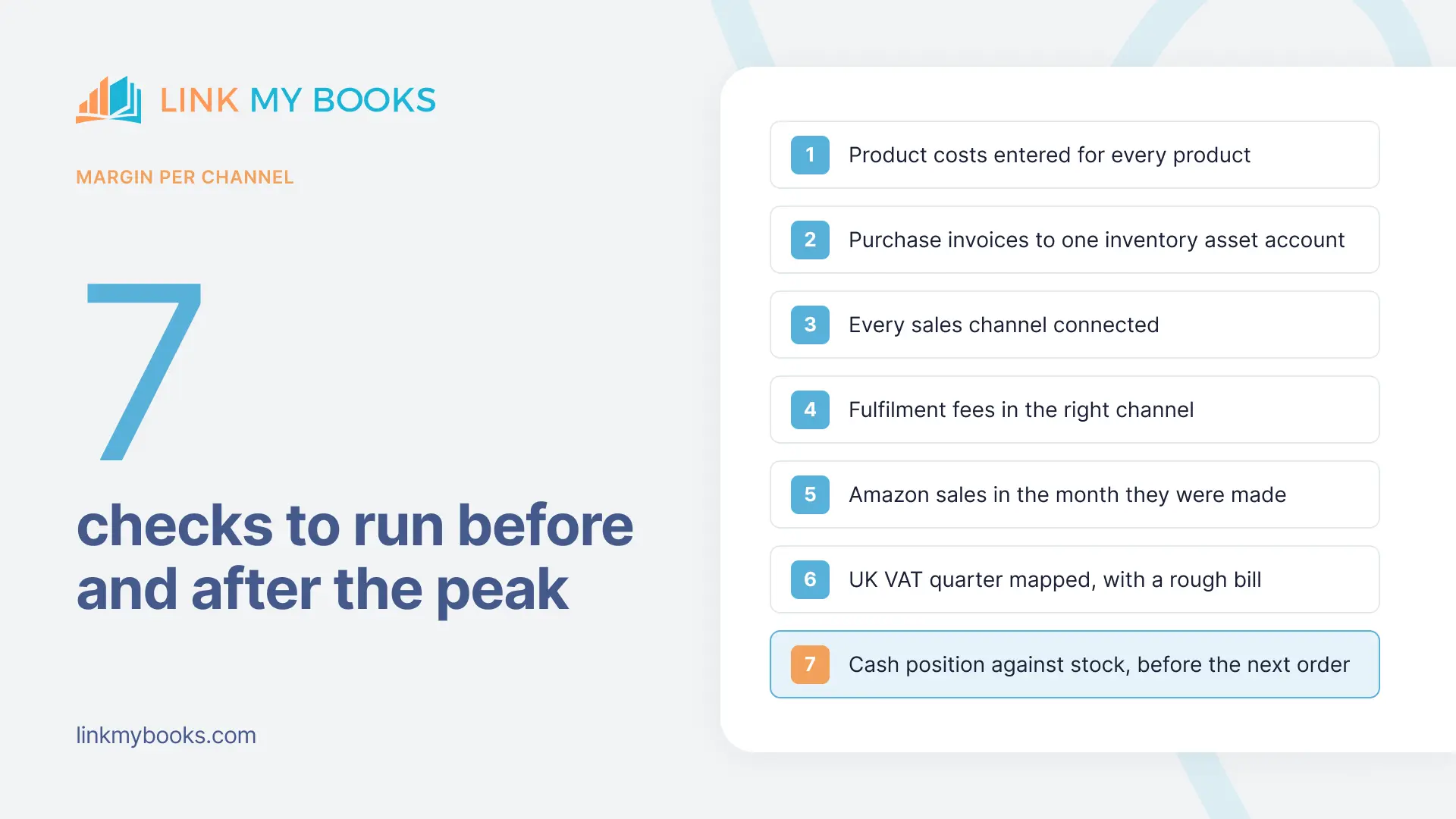
Work through them before 27 November and again after Christmas, and you'll know where each client stands before January starts.
Can you tell each client exactly how they did?
By January, every ecommerce client will want to know how Black Friday and Christmas went. Not only the sales, but the margin, the UK VAT bill and what's left to spend.
Firms that check cost of goods sold, channel margins and the timing of Amazon payouts now can answer that quickly, with numbers that hold up.
Join our end of year wrap-up webinar on Thursday 10 December at 1:00 PM. Register for the end of year wrap-up
Where we fit in
Every section above comes back to one thing: getting each client's marketplace sales data into the books correctly, while volumes are at their highest. That's what we built Link My Books to do.
Daniel Little, Co-Founder (and ex-ecommerce business owner), built it for the way marketplace sales actually reach the books. It posts your ecommerce clients' sales from Amazon, Shopify, eBay, Etsy, TikTok Shop, Walmart and more into Xero or QuickBooks, reconciled to the bank deposit.
For each check in this guide:
- Cost of goods sold set up before the spike: COGS tracking posts cost of goods sold alongside each payout, syncs Shopify's cost per item, and gives you stock values, P&L by channel and product groups.
- Knowing which clients to process first: the Practice Dashboard shows which clients are ready to process, and which are missing sales data, on one screen.
- Margin per channel: Amazon MCF Fee Split puts fulfilment fees for Shopify, eBay and TikTok Shop orders in the channel they belong to.
- Amazon sales in the right month and UK VAT quarter: Amazon Deferred Payments counts each sale in the month it was made, not the month Amazon pays.
That's how 500+ accounting and bookkeeping firms save 5+ hours per client, per month, and those hours matter most when every client wants their numbers at once.
See how it works for accountants and bookkeepers.
Firms that start before 2027 get 50% off their first three months.
Book a discovery call to see how it handles a Black Friday month, from the first sale to the January numbers.
Which client will you run the seven checks on first?
Frequently asked questions
When is Black Friday 2026, and when do the sales reach your clients' books?
Black Friday 2026 is on Friday 27 November, and Cyber Monday on Monday 30 November. The sales hit revenue and stock straight away, but Amazon pays some of them out in December. Their UK VAT generally falls in whichever quarter the sales do, and the cash picture becomes clear in January 2027.
Does Black Friday affect my clients' UK VAT return?
It can, for clients whose UK VAT quarter takes in November and December. Sales over that period raise the output tax on the return. Because the stock was bought in advance, the matching purchases often sit in a previous quarter, so the UK VAT bill can be higher than usual.
When does Amazon pay out Black Friday sales?
Amazon holds the money until seven days after delivery, known as DD+7. So a sale made on Black Friday or Cyber Monday, and delivered a few days later, is often paid out in December. That can move revenue, and its UK VAT, into a different month from the sale.
Why does cost of goods sold matter after Black Friday?
Without it, a client's P&L shows sales minus fees, not profit, and the inventory balance never goes down. After a Black Friday spike, far more stock has sold, so the gap is bigger. Cost of goods sold also drives margin by channel, return on investment and stock values.
How do I see profit margin per sales channel after Black Friday?
You need cost of goods sold set up first, so each channel shows true margin rather than revenue minus fees. If a client uses Amazon to ship orders from other channels, those fulfilment fees also need splitting out, or Amazon's margin looks lower and the other channels' higher.